What Happens to Your Body After a Tough Mudder — and How We're Bringing Recovery to the Finish Line
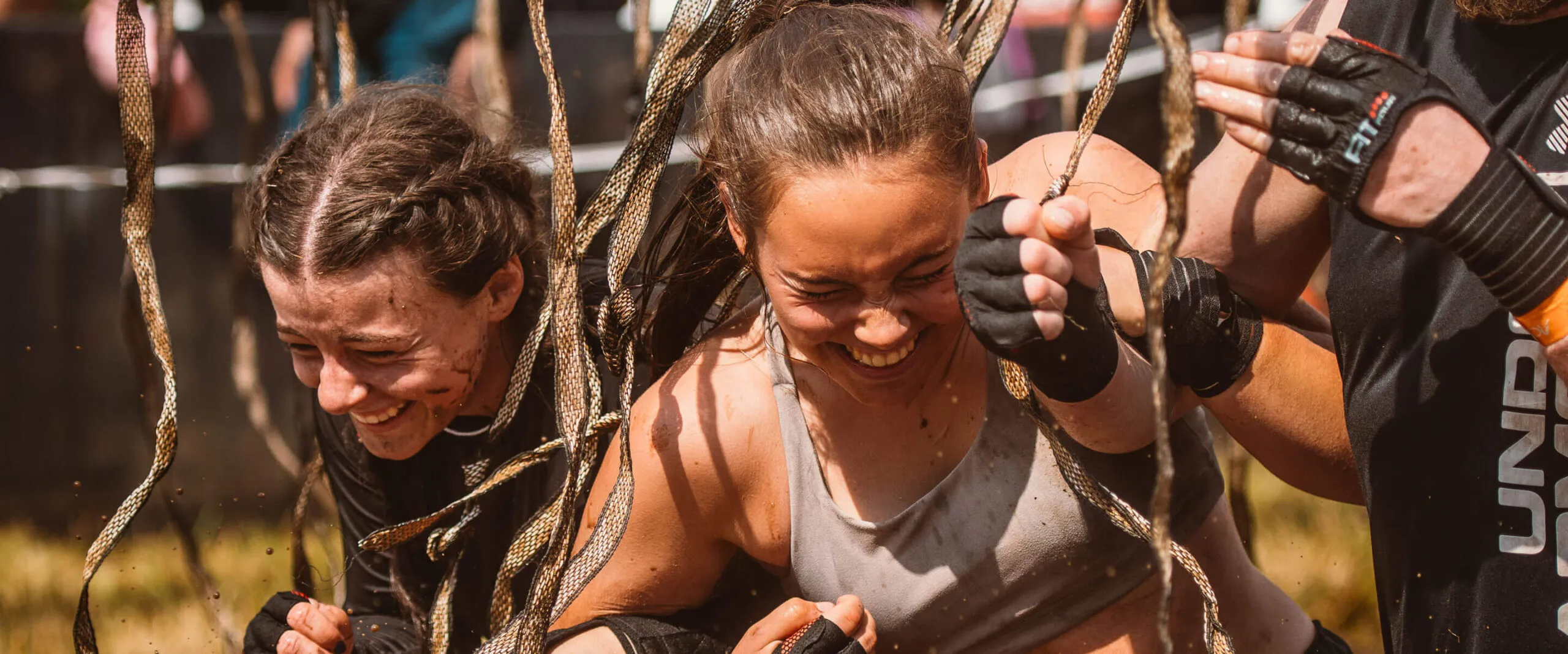
You crossed the finish line. Your legs are shot, your shoulders are bruised, and you're covered in mud from an obstacle you'd rather forget. You feel amazing. And also completely destroyed.
That contradiction is exactly what makes obstacle racing so addictive — and exactly why recovery matters more here than in almost any other sport. A Tough Mudder isn't just a run. It's a multi-hour full-body stress test that depletes your electrolytes, micro-tears your muscle fibers, and burns through your glycogen stores at an accelerated rate.
What your body actually goes through
During a standard Tough Mudder (10–12 miles, 20–25 obstacles), your body loses 1–2 liters of fluid per hour through sweat. Electrolytes — sodium, potassium, magnesium — go with it. These aren't just comfort molecules. They're the signaling infrastructure your muscles use to contract, your heart uses to beat, and your nerves use to fire.
The cold water obstacles accelerate vasoconstriction, forcing your cardiovascular system to work harder to maintain core temperature. Grip-heavy obstacles like monkey bars and hanging rings create eccentric loads that tear muscle fibers in ways that don't show up until 24–48 hours later — the classic DOMS window.
Why we're at the finish line
Most athletes walk off the course, grab a banana and a beer, and call it done. That's not a recovery strategy — that's just stopping. The 2-hour window post-race is when your body is most primed to absorb nutrients and begin the repair process. We call it the anabolic window, and most people miss it entirely.
Our finish-line IV stations deliver a full electrolyte replacement formula with added B vitamins, vitamin C, and anti-inflammatory compounds directly into your bloodstream — no digestion delay, 100% absorption. Athletes who receive IV recovery after a Tough Mudder report significantly reduced soreness within 12 hours and full training readiness within 48.
This is what optimization looks like at the finish line. Not just surviving the race — thriving after it.
Ready to optimize?
Book a level or start with a biomarker test.
More from Insights